
Building a fence on the property line in Ontario
Where the line is, who pays for a shared fence, and what the Line Fences Act does and doesn't do. Plus what to sort out with your neighbour before a single post goes in, in Peterborough, Kawartha Lakes and the towns around them.
The Durable Fence Team. Updated . 6 min read.
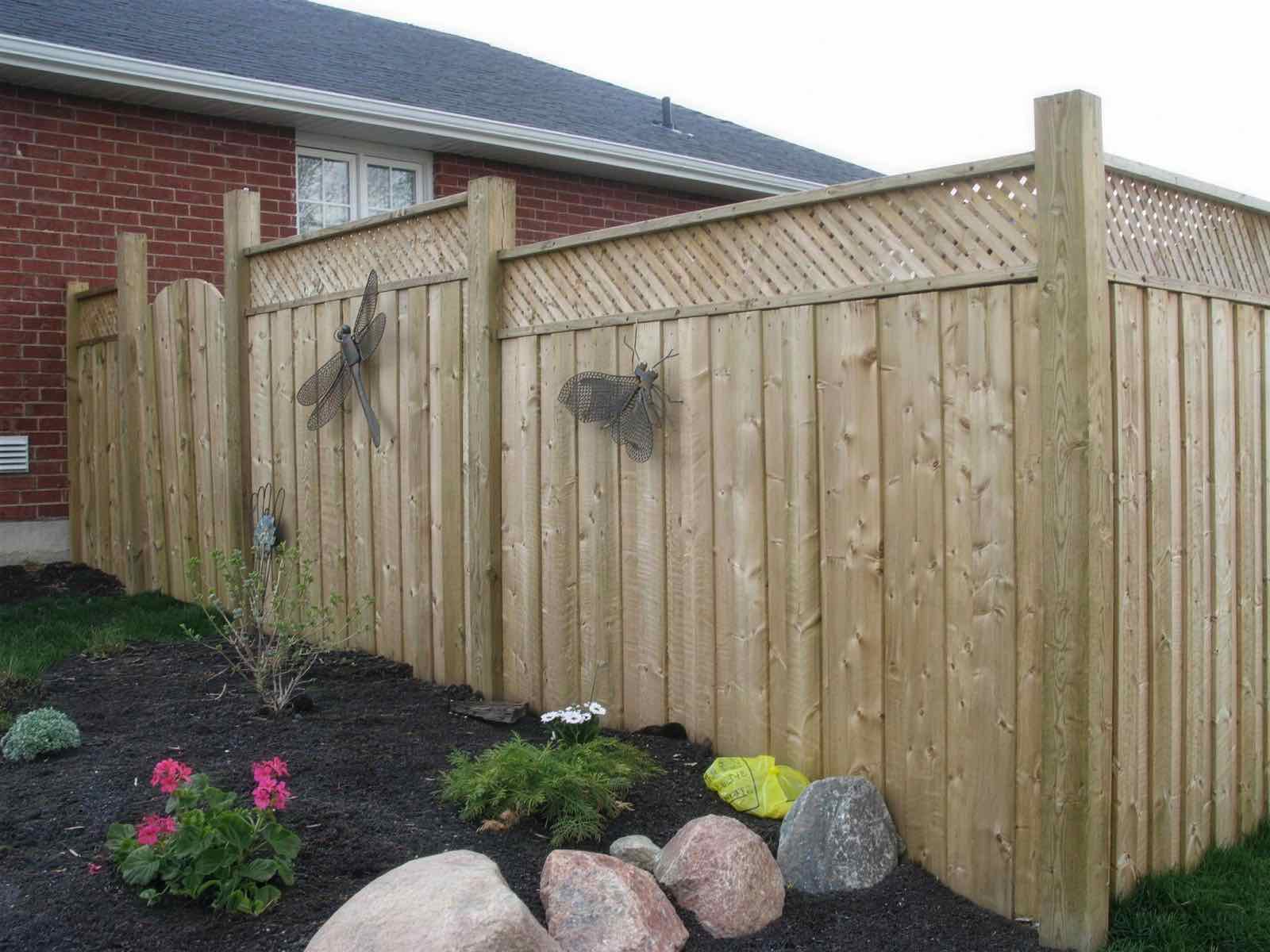
Most fence arguments between neighbours come down to two questions. Where exactly is the line, and who pays? Ontario has a process for the second one. The first is on you.
We're fence builders, not lawyers. This is what we see on real jobs around Peterborough, plus what the province and the municipalities publish. If a neighbour situation is already heated, talk to a lawyer before anyone digs.
Find the line first
An old fence, a hedge or a row of trees isn't proof of where your property ends. Neither is a guess from the neighbour who's lived there longest.
The way to know is a survey by an Ontario Land Surveyor. If you have one from when you bought the house, dig it out. If not, the Association of Ontario Land Surveyors lists surveyors by area. Kawartha Lakes is blunt about it: owners hire the surveyor at their own cost, and the city won't determine boundaries for you.
When we come out for an estimate, we walk the lines with you and ask what you know about them. If nobody's sure where the line is, we'd rather wait for a survey than build a fence that has to move.
On the line, or just inside it?
You have two choices.
Build just inside your own line. The fence is yours. You pick the style and height (within the by-law), you pay for it, and you look after it. Leave yourself room to reach the far side for repairs and staining.
Build on the line with your neighbour. A fence on the boundary is a line fence, and both of you have a stake in it. That can mean sharing the cost, but it also means agreeing on style, height, who maintains which side and what happens when it needs replacing. Put whatever you agree in writing, even a short signed note with a sketch.
What the Line Fences Act does
When neighbours can't agree about a line fence, Ontario's Line Fences Act gives them a way to settle it. One owner asks the municipality for fence-viewers. Three of them visit the site and issue an award that says how the work is split between the owners and what kind of fence it should be. Either owner can appeal within 15 days of receiving a certified copy of the award.
It has limits worth knowing before you count on it:
- It doesn't decide where the line is. The province says so directly. A boundary dispute is a civil matter.
- It's for fences that haven't been built or rebuilt yet. If you put up a new line fence, or rebuild a whole one, on your own, you can't use the process afterwards to make your neighbour pay part of it.
- The person asking usually pays for the viewing. The province notes that neighbours often settle once they learn that.
- Your municipality may have replaced it. A council can pass a by-law that exempts all or part of the municipality and splits fence costs a different way.
Town by town
Kawartha Lakes (Lindsay, Omemee). The city has a Fence Cost Sharing By-law (2019-059) that overrides the Line Fences Act in urban, hamlet and waterfront areas. Unless neighbours agree otherwise, each pays half of a basic fence, and written notice has to go to the neighbour at least 14 days before work starts. It can't be used to replace a fence that's in good repair or to settle a property line dispute. Rural and agricultural areas still use the Line Fences Act, and the city doesn't process fence-viewer applications from November 1 to March 31 unless council allows it.
Peterborough, Cobourg, Selwyn, Asphodel-Norwood, Trent Hills, Havelock-Belmont-Methuen. Ask the clerk's office whether the Line Fences Act applies to your address or whether a local by-law replaces it. We haven't found an official page from these municipalities that answers it, so we won't guess.
Height and front-yard rules are a separate question. Our fence height guide covers them town by town.
Get a locate before anyone digs
Ontario law requires a locate request before digging, fence posts included, and Ontario One Call does it for free. Ask at least 5 business days ahead. Private lines, like a buried cable to a yard light or a shed, aren't marked by One Call and need a private locator.
Common questions
Can my neighbour attach things to my fence?
It depends on whose fence it is. A fence built entirely on your side of the line is yours, and a fence on the line is shared. If a neighbour is hanging planters, lights or a shed wall off your fence and it bothers you, start by talking to them. If that doesn't work, a survey settles where the fence sits and a lawyer can tell you what you can do about it.
Can I take down my neighbour's fence?
Don't take down or cut a fence until you know whose it is. A survey tells you where it sits. If it's on the line or on their side, removing it without agreement can land you in a civil dispute. Get the agreement in writing, or get legal advice.
My neighbour won't pay for half. Can I make them?
Maybe, and only before you build. Where the Line Fences Act applies, fence-viewers can split the cost of a new or rebuilt line fence. In Kawartha Lakes' urban and waterfront areas, the cost-sharing by-law does it, with 14 days' written notice. Build first and ask later, and in most cases you'll be paying for all of it.
Does the fence company figure out the property line?
No. We work from your survey or from markers you and your neighbour agree on. If the line is in doubt, we'll tell you so before we quote.
Planning a fence along a shared line? Book a free estimate or call (705) 977-2531. We'll walk the line with you and check the by-law for your address before you commit to anything.
Keep reading
Wood fence styles for Peterborough yards
Board-on-board, solid panel, lattice tops and spaced-board pickets each do a different job. Here's how they compare for privacy, looks and upkeep, and which one fits which part of your yard.
How tall can your fence be in Peterborough?
How tall a fence can be depends on your town, your yard and whether you're on a corner. Cobourg allows 0.75 m out front and 1.8 m near rear and side lot lines, and Selwyn and Asphodel-Norwood allow about 1 m out front and 1.8 to 2 m out back. We check the current by-law for your address at the free estimate.
Pool fence rules: what inspectors actually check
Pool enclosure rules are set town by town. Around here the minimum height is 1.2 m (4 ft) in Peterborough, Kawartha Lakes, Selwyn and Asphodel-Norwood, and 1.83 m (6 ft) in Cobourg, with self-closing, self-latching gates. Here is what each town asks for and what inspectors check, so opening day stays on schedule.
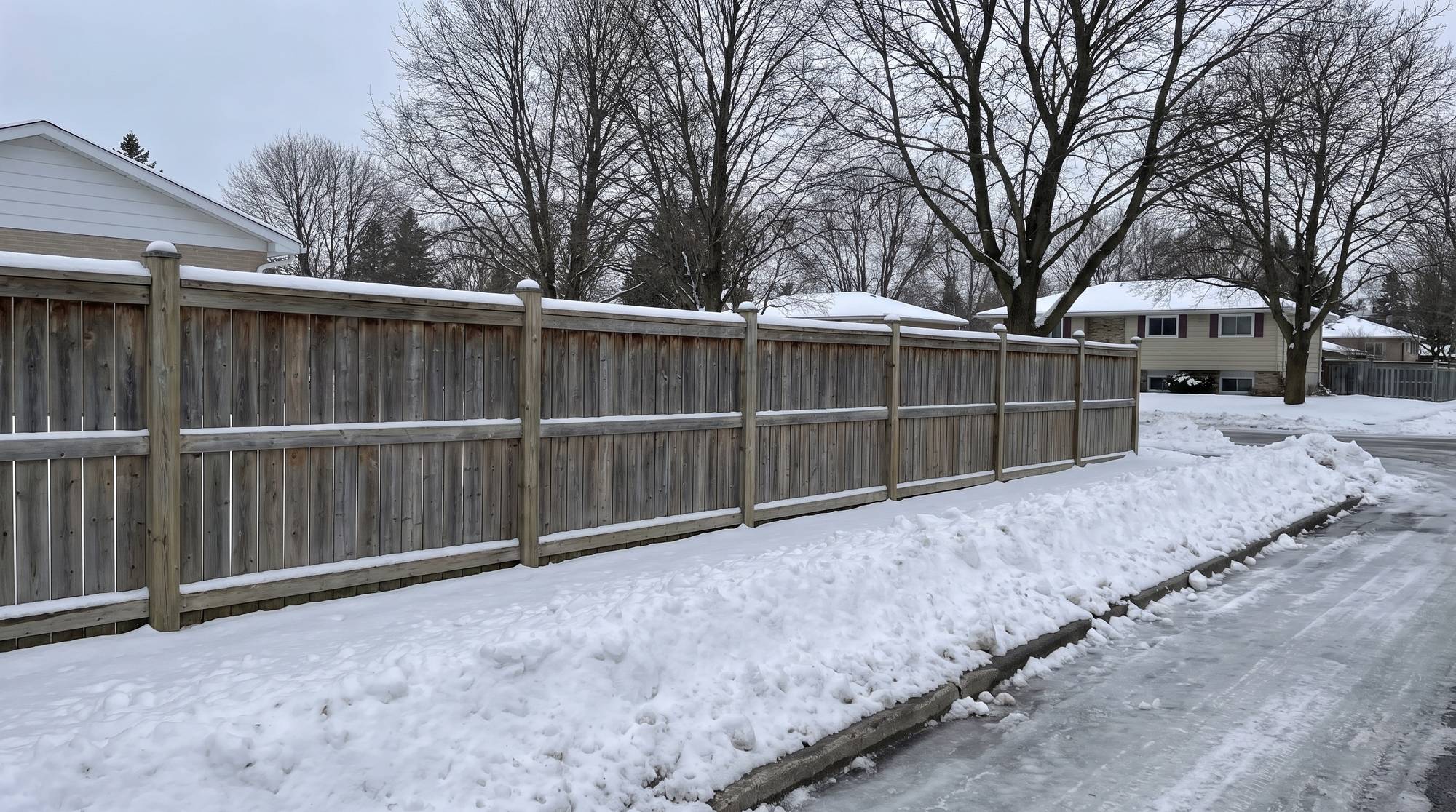
Spring books up fast.
Get your free on-site estimate now and have the price in writing before the ground thaws.